

24 March 2021
The commercial property market has seen a major overhaul of the ‘use class’ system in England.
Emma Elkington, who is an Associate Solicitor, specialising in commercial property at Phillips Solicitors, sets out The Town and Country Planning (Use Classes) (Amendment) (England) Regulations 2020 which came into effect on 1 September 2020.
The changes represent the most extensive change to planning use classes since The Town and Country Planning (Use Classes) Order 1987.
Use Classes under the 1987 Order
The 1987 Order consists of four primary use classes, each with several subclasses within which a change of use do not require the grant of planning permission.
The main four main use classes under the 1987 Order are as follows:
- Class A – retail, food and drink, financial and professional services;
- Class B – offices, industry and places of work;
- Class C – homes and residences; and
- Class D – leisure, assembly and institutions.
New Use Classes
The intention of the new regulations is to simplify the regime and allow for more flexibility, with a particular emphasis on the retail sector to enable the repurposing of buildings on high streets and town centres.
The previous Use Classes A1-A5, B1, D1 and D2 are revoked and replaced with:
- New Class E – Commercial, Business and Service – which now incorporates shops (A1), financial and professional services (A2), restaurants and cafés (A3) and offices (B1), gyms, nurseries and health centres (D1 and D2) and other uses suitable to town centre locations.
- New Class F1 – Learning and Non-residential Institutions – which incorporates former D1 uses such as, buildings for the provision of education, museums, public libraries, public halls or exhibition halls and buildings used for, or in connection with, public worship or religious instruction.
- New Class F2 – Local Community – which groups together uses from former Class D2 covering activities which primarily the government wishes to protect for the local community, for example, buildings primarily used by the local community and for activities such as swimming, skating rinks and areas of outdoor sports.
- Revocation of former Class A4 (drinking establishments), Class A5 (hot food takeaway) and Class D2 (cinemas, concert halls, bingo halls, dance halls and live music venues), which are now classed as Sui Generis and as such, require planning permission for a change to and from these uses.
Impact going forward and transitional provisions
From 1 September 2020, if a building is being used for a purpose falling within Class A1 (shops), A2 (financial and professional services), A3 (restaurants and cafés) or B1 (offices), then it will be deemed to be used for a purpose set out in new Class E. Change of use to another use within Class E will be permitted without the need for planning permission. This is still subject however to any prior planning condition which may affect the specific property in question.
Applications for planning permission, permission in principle or approval of reserved matters, which were submitted before 1 September 2020 and refer to the existing use classes, are to be determined by the local planning authority using the use classes under the 1987 Order, as they existed on 31 August 2020.
From 1 September 2020 until 31 July 2021, where permitted development rights set out in The Town and Country Planning (General Permitted Development) (England) Order 2015 are to be used, the use of the development should be assessed based on the use classes under the 1987 Order, as they existed on 31 August 2020. New permitted development rights will be introduced from 1 August 2021.
If you have any questions about the new use classes or would like legal advice on any other commercial property matter, please contact Emma by emailing [email protected] or by calling 01256 854610.
Alternatively click here to go to our contact page.
Disclaimer
This article is current at the date of publication set out above and is for reference purposes only. It does not constitute legal advice and should not be relied on as such. Specific legal advice about your specific circumstances should always be sought separately before taking any action.
Contact Us
Please call us or email and we’ll get back to you as soon as possible.

Step Into the World of Opera Families across Hampshire are invited to experience a day of creativity, music, and discovery at The Grange Festival Family Open Day, proudly supported by P ...
More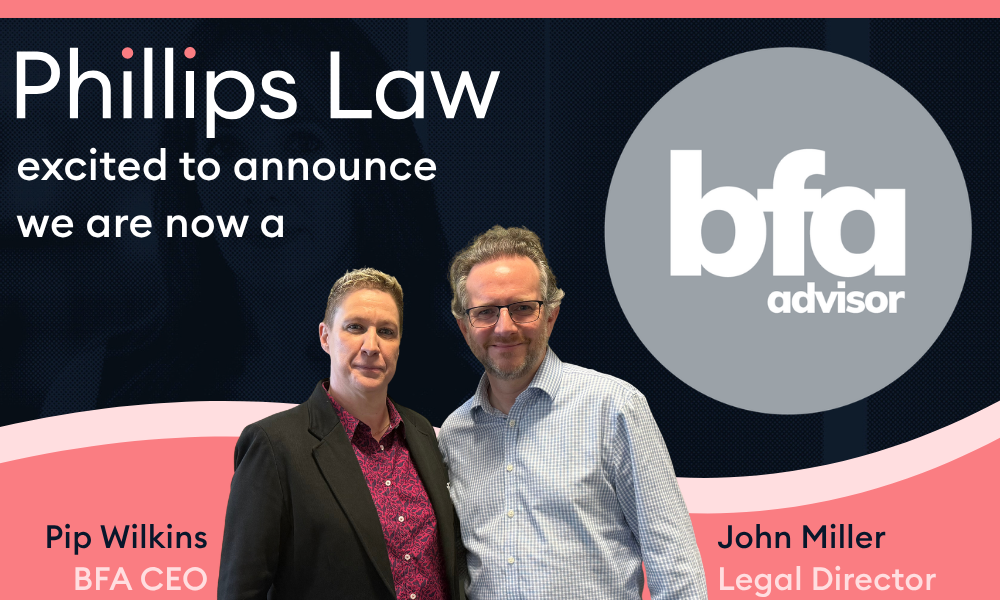
Phillips Law is pleased to announce that the firm has become an advisor member of the British Franchise Association (BFA), the UK’s largest and most influential trade association for fr ...
More
We are delighted to announce that Phillips Law is the regional sponsor of the Knight Frank Schools Triathlon, supporting both the Charterhouse and Marlborough events. The Schools Triath ...
More
What farming families and business owners need to know If you own a farm, land, or a family business, you will have undoubtedly heard that inheritance tax (IHT) rules are changing. Whil ...
More
We are about to see a great wave of Employment Law changes following the Employment Rights Act 2025 becoming law in December. We will use these updates to keep you abreast of the change ...
More
As we look back on a busy and notable January at Phillips Law, we wanted to share a round-up of recent milestones, insights, and community moments from across the firm. Phillips Law cel ...
More